Welcome to the Mathematical World!
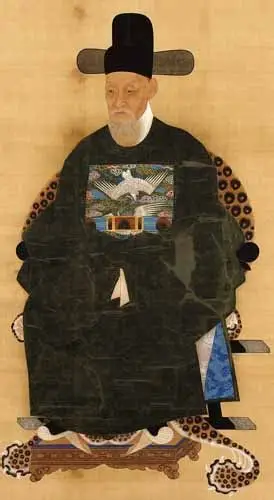
Choi Seok-jeong
Joseon-Era Korean Mathematician and Scholar
Choi Seok-jeong (1646–1715) was a Korean mathematician and high-ranking Joseon official whose 1700 treatise Gusuryak (“Nine-Number Manual”) introduced the first known use of orthogonal Latin squares, predating Euler by over 60 years.
He crafted a pair of 9×9 Latin squares that, once superimposed, enabled the construction of a magic square. In modern notation, two Latin squares \(L_1, L_2\) of order 9 are orthogonal if each ordered pair \((L_1(i,j), L_2(i,j))\) is unique—resulting in a consistent “magic” arrangement :contentReference{index=1}.
Choi also posed the famed “Hexagonal Tortoise Problem,” assigning numbers to the vertices of interconnected hexagons so that sums match—a problem now appreciated for its combinatorial depth and coding theory relevance :contentReference{index=2}.
Remarkably, Choi achieved these results while serving as a statesman and without formal mathematical training—his work represents a unique merging of scholarly creativity and public duty.
Legacy
Choi Seok-jeong’s achievements dramatically shifted understanding of combinatorial design. By independently discovering orthogonal Latin squares and ingenious puzzles centuries before Europe, he earned a revered place in the global history of mathematics.

All rights reserved by the Mathematical Unity
Contact: +8801400044645
Email: mathematicalhorse1453@gmail.com
Our Discord Server: Mathematical Unity [Ulus Riyadiyat]